
The Most Underrated Recovery Tool for Athletes Might Be Cognitive
Recovery used to mean one thing: rest your body.
Now athletes are doing cold tubs, mobility work, massage guns, sleep tracking, hydration protocols, stretching routines, breathing work, all of it. Recovery has become part of performance culture itself.
But there’s still one area almost nobody talks about enough:
Mental and visual fatigue.
Not motivation. Not “being locked in.” Actual game-processing fatigue.
You can usually feel it after a packed tournament weekend, a long road trip, back-to-back games, or a heavy training block. Your body might not even feel terrible physically, but something feels slightly off. Your timing is late. Reads feel delayed. Tracking feels harder. Decisions take an extra split second. You stop playing instinctively and start thinking too much.
The game speeds up.
A lot of athletes assume that feeling is purely conditioning-related, but performance depends on way more than just your legs or lungs. In almost every sport, your brain and visual system are constantly working overtime.
Tracking movement.
Recognizing patterns.
Processing spacing and depth.
Picking up body positioning.
Filtering distractions.
Adjusting timing.
Making split-second decisions under pressure.
That workload adds up over time.
And just like your body gets physically fatigued, those systems can get overloaded too.
It’s why athletes sometimes look physically fresh but still feel mentally behind the play. Coaches will call it “slow processing” or say someone looks disconnected from the game. Usually it shows up in small ways first. Late reactions. Missed reads. Hesitation. Overcommitting. Losing tracking in traffic. Timing breaking down.
The interesting part is that a lot of high-level athletes are starting to rethink what recovery actually looks like because of this.
Recovery days are becoming less about doing absolutely nothing and more about staying sharp without adding heavy physical stress. Some athletes use lighter skill sessions. Others watch film. Some do mobility or activation work. And more athletes are beginning to include visual-cognitive training as part of that routine too.
Not because they’re trying to exhaust themselves more, but because they want to stay connected to the speed of the game while allowing the body to recover.
That matters, especially during long seasons.
Taking too much time completely off can sometimes leave athletes feeling rusty mentally even if their body feels rested. Timing fades. Tracking fades. Decision-making feels less automatic. Athletes talk all the time about needing a game or two to “feel sharp again.”
A big part of that sharpness is cognitive.
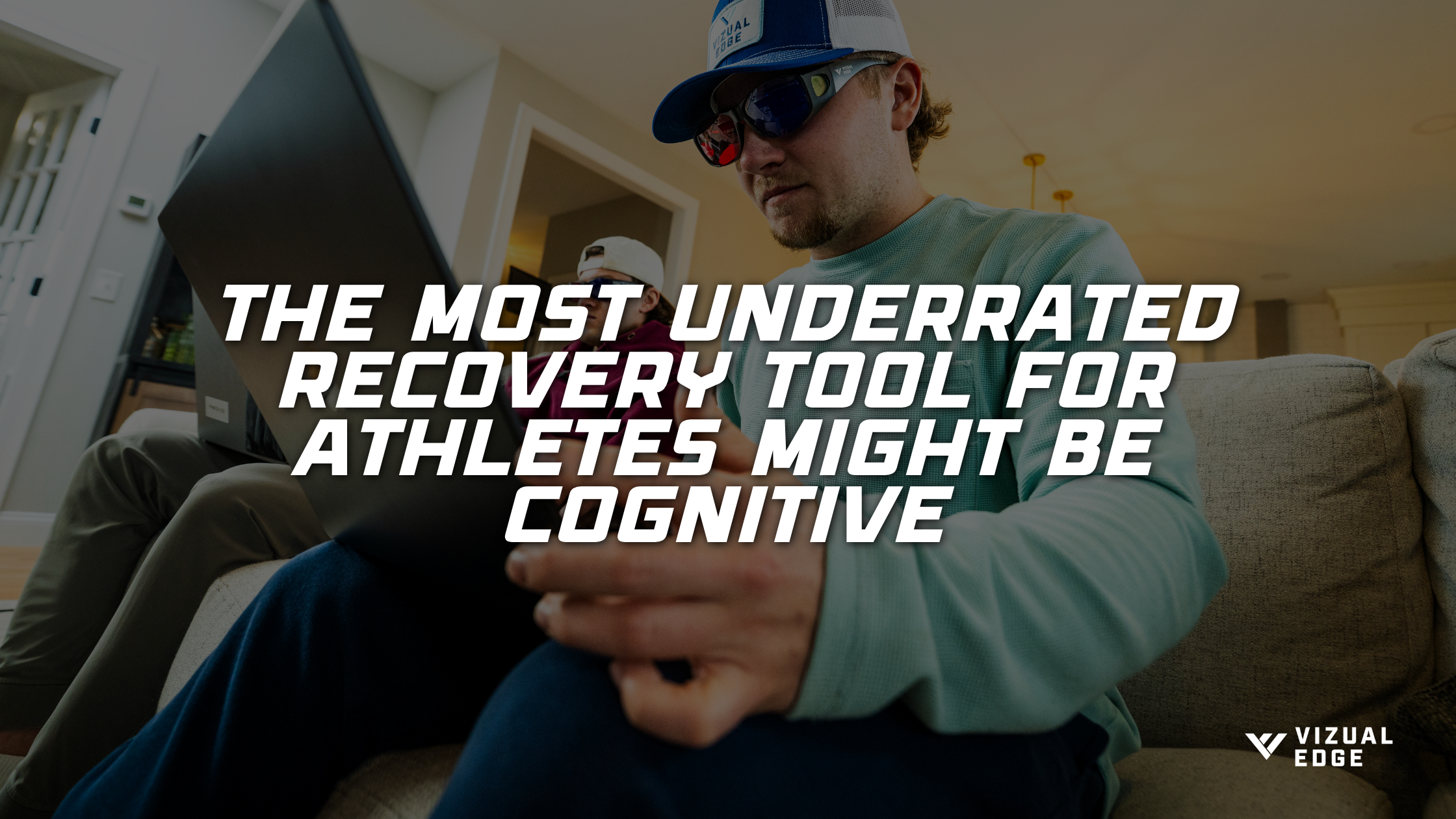
That’s one reason tools like Vizual Edge are becoming part of more athletes’ routines. Instead of adding more mileage to the body, athletes can work on the visual and cognitive side of performance through short interactive sessions focused on tracking, processing, awareness, timing, and focus, all from a laptop or tablet.
It’s low-impact, easy to fit into lighter days, and gives athletes a way to keep training the systems behind performance without needing a rink, field, or gym.
Because elite performance has never been just physical. The athletes who look calm under pressure usually are not reacting faster by accident. They’re processing the game earlier and more efficiently.
And that’s trainable too.
If you want to try Vizual Edge for yourself, use code VE10 for 10% off and start training the part of performance most athletes overlook.
