
Lacrosse Vision Training with Vizual Edge: How Players and Goalies Gain a Competitive Edge
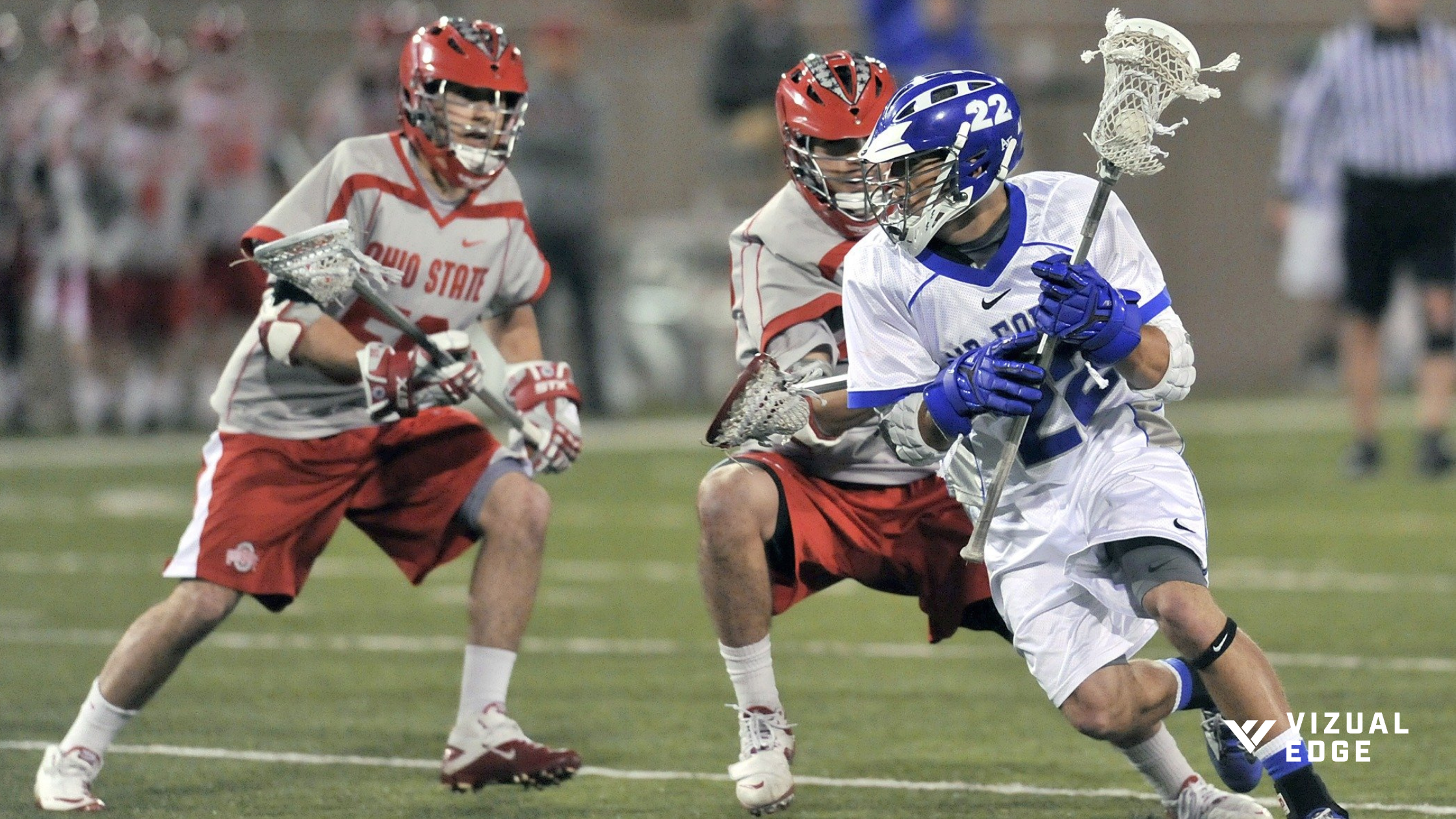
For lacrosse Players: See the Field Faster, Play the Game Smarter
Lacrosse is chaos in motion—cuts, slides, picks, and passes happening all at once. Physical strength and stick skills matter, but the real separator at higher levels is how quickly you see what’s happening and turn it into the right decision.
That’s where lacrosse vision training with Vizual Edge comes in.
Vizual Edge is an online vision and cognitive training platform built to sharpen the skills your eyes and brain use every play—like tracking, depth perception, reaction time, and field awareness. Athletes complete a short assessment (the Edge Test) to get an Edge Score, then follow a customized training plan with 3D exercises they can do right from a laptop or tablet using Vizual Edge’s red–blue 3D glasses.
For lacrosse players, that translates directly into:
Reading slides sooner
Seeing passing lanes before they close
Timing cuts and picks better
Catching and finishing in tight windows
Staying locked in for four quarters
Turning Vision into a Competitive Weapon
Most lacrosse training focuses on speed, strength, stick work, and conditioning. But every dodge, pass, check, and shot is driven by what your eyes send to your brain. When visual processing is sharper, everything else you’ve trained becomes easier to execute.
Vizual Edge focuses on core visual skills that matter for field players:
Alignment & Depth Perception – Help you perceive the true location of the ball and other players, so your passes and shots go where you intend and you time cuts more precisely.
Convergence & Divergence – Support your ability to switch focus between close and far targets quickly, like tracking a ball into your stick then immediately scanning for the next pass.
Tracking (Pursuits & Saccades) – Train you to follow the ball smoothly and shift your gaze rapidly between multiple players, crucial in fast ball movement and man-up situations.
Recognition & Contrast Sensitivity – Improve how quickly you identify patterns, colors, and subtle changes—like recognizing a cutter out of your peripheral vision or picking up the ball against a busy background.
These skills are not fixed talents—they’re trainable, just like strength in the weight room. Vizual Edge acts like “weight training for your eyes,” using structured visual drills to upgrade how efficiently you process the game.
Practical Benefits for Lacrosse Players
Here’s how Vizual Edge lacrosse vision training shows up in real game situations:
1. Better Ball Tracking in Traffic
On clears, in transition, or during fast ball movement, it’s easy to lose sight of the ball in a crowd. Training tracking, convergence, and contrast sensitivity helps you keep the ball locked in—even when defenders, sticks, and bodies are cutting across your line of sight.
2. Faster Decision-Making on Dodges and Feeds
Attackmen and midfielders constantly read slides and off-ball movement while dodging. Enhanced depth perception, recognition, and multi-object tracking make it easier to process where help is coming from, which cutter is open, and whether to shoot or move the ball—all in a split second.
3. Cleaner Catch-and-Release Finishing
Finishing in tight often comes down to milliseconds: catching the ball, locating the cage, and shooting before the slide or goalie adjustment arrives. Stronger convergence and alignment help you receive passes cleanly, while depth perception and tracking help you rapidly relocate the target and pick your spot.
4. Smarter Off-Ball Movement & Field Awareness
Off-ball players don’t just watch the ball—they’re constantly reading defenders, space, and matchups. Vision training improves your ability to see more of the field, use your peripheral vision, and anticipate how a play will develop. Vizual Edge’s lacrosse-specific messaging emphasizes expanding field awareness so players “read the field like a pro” and make game-changing plays sooner.
5. More Consistent Handling in Weather & Low Light
Cloudy days, night games under stadium lights, or shadows can make the ball harder to see. Training contrast sensitivity and tracking helps you better distinguish the ball from the background and deal with less-than-perfect lighting, so your hands stay reliable.
How Lacrosse Players Use Vizual Edge Day-to-Day
One of the biggest advantages of Vizual Edge is how easy it is to fit into an existing training routine:
Take the Edge Test – A quick ~10-minute online assessment that measures your visual and cognitive skills and gives you an overall Edge Score plus detailed breakdowns.
Review Your Edge Score – See which visual skills are strengths and which need work, with comparisons to other athletes in your sport and age group.
Follow Your Training Plan – Complete 15-minute 3D sessions about three times per week. Sessions are personalized and progress as your skills improve.
Retest & Track Progress – Retake the Edge Test periodically to see how your Edge Score and on-field confidence are moving in the right direction.
For lacrosse players serious about standing out—whether at showcases, club, high school, or college—this kind of vision training becomes a hidden advantage. You’re not just faster or stronger; you’re seeing the game at a higher level.
For Lacrosse Goalies: Elevate Your Eyes, Elevate Your Save Percentage
If field players benefit from better vision, goalies live and die by it.
Lacrosse goalies face blistering shots from multiple angles, screens, quick sticks on the crease, and chaotic rebounds. The difference between a save and a goal often comes down to just a few inches—and a few milliseconds.
Vizual Edge’s lacrosse vision and cognitive training is especially powerful for goalies looking to improve:
Save percentage
Rebound control
Reads on shooters’ sticks
Poise under pressure
Why Goalie Vision is Different
Goalies have unique visual demands compared to other lacrosse players:
They must pick up the ball early out of the shooter’s stick.
They need to judge speed and trajectory instantly to move their body and stick into the right spot.
They’re constantly dealing with screens, deflections, and traffic.
They must re-center visually after each save or rebound, ready for the next shot.
Vizual Edge targets exactly these demands by training skills like depth perception, tracking, convergence, divergence, and multi-object tracking in short, repeatable drills.
Key Visual Skills for Lacrosse Goalies
Here’s how specific Vizual Edge visual skills map directly to goalie performance:
1. Depth Perception – Reading Shots & Step-Out Positioning
Depth perception helps goalies judge how fast the ball is traveling and how far it is from the crease. For goalies, that means:
Getting set at the right time
Knowing when to step to the ball to cut down the angle
Reading whether a shot is rising, fading, or dropping
Vizual Edge’s depth perception drills train this ability to interpret speed and trajectory, which directly impacts save timing and positioning.
2. Tracking (Pursuits & Saccades) – Seeing the Ball Through Traffic
Goalies need continuous tracking to follow the ball through multiple passes and rotations, and rapid eye movements (saccades) to snap their vision to new threats—like a back-door cutter or a shooter skipping into a lane.
Vizual Edge includes tracking exercises that challenge athletes to follow moving targets and quickly identify changes, building the same eye-movement patterns required to track the ball from stick to net.
3. Convergence & Divergence – Adjusting from Crease to Perimeter
On defense, goalies constantly switch focus between:
The ball on the perimeter
Attackers cutting through the crease
Screens right in front of the crease
Convergence helps you focus on close targets (like a quick-stick opportunity on the crease), while divergence helps you refocus on shooters farther from the cage. Training both makes it easier to rapidly refocus as the play shifts—without losing the ball or getting visually “stuck.”
4. Recognition & Contrast Sensitivity – Beating Screens and Disguises
Attackers try to hide the ball behind their body, use quick stick fakes, or shoot through screens. Recognition and contrast sensitivity drills support your ability to:
Pick up the ball earlier out of the stick
Separate the ball from helmets, jerseys, and background clutter
React to subtle changes in stick angle or release
This is essential when shots come through traffic or from deceptive shooters.
5. Multi-Object Tracking – Managing Multiple Threats
Great goalies don’t just watch the ball—they constantly scan for backside cutters, skip lanes, and potential re-dodge options. Multi-object tracking exercises in Vizual Edge force your brain to track several moving targets at once, similar to what you see during a man-down possession or a fast-break.
The Mental Side: Confidence Built on Data
Goalie is one of the most mentally demanding positions in sports. A few bad goals can shake your confidence, even if your technique is sound.
Vizual Edge gives goalies objective data—a tangible Edge Score and skill breakdown—to show exactly where they’re strong and where they’re improving.
That means:
You’re not just hoping to see the ball better—you can track visual improvements over time.
You can pair technical work (stance, arc, hand positioning) with visual work (tracking, depth perception), knowing both are moving you toward higher performance.
You have a repeatable routine: 15-minute vision sessions 3x per week that help you feel sharper and more locked in.
Lacrosse-specific feedback and testimonials from experienced coaches and program owners reinforce that visual skills are a “huge component of our game that is often overlooked” and that Vizual Edge helps players and goalies train those skills in a structured way.Vizual Edge
How Goalies Integrate Vizual Edge into Training
A typical week for a goalie using Vizual Edge might look like:
Before practice (2–3x/week): 15-minute session to switch the brain into “tracking mode” and sharpen focus.
On off days: Short visual sessions paired with film work—watching how quickly they pick up shots and tracking the ball on screen.
Preseason & in-season: Regular Edge Test check-ins to see how vision training is impacting reaction time, ball pickup, and confidence in the cage.
Over time, goalies often report feeling calmer on high-shot-volume days, reading shooters earlier, and “seeing the ball bigger” as their visual skills improve.
The Bottom Line: Vision Training is the Next Edge in Lacrosse
Lacrosse is only getting faster. Players are stronger, sticks are better, offensive systems are more sophisticated, and goalies face higher shot volume and more deceptive shooters than ever.
Traditional training—lifting, conditioning, wall ball, shooting reps—will always matter. But the players and goalies who rise above the rest are often the ones who see the game differently:
They process chaos faster.
They track the ball more cleanly.
They anticipate instead of react late.
Vizual Edge lacrosse vision training gives both field players and goalies a way to intentionally train those visual and cognitive skills, just like they train their bodies.
Whether you’re trying to boost your save percentage, score more goals, or simply feel more in control of the game, adding structured vision training with Vizual Edge can be the separator between being a good player—and becoming a great one. Learn more at www.vizualedge.com/lacrosse.
